

Why Aren’t Modern Books Considered Classics?
I discuss pens and ink all the time in these Drippy Musings, but what are these tools used for? Writing, of course. And, yet, I rarely talk about writing at all. That seems strange to me, as I think of myself primarily as a writer. I have a master’s degree in journalism, a novel in print and am a regular contributor to Pen World Magazine, among several others. I also just happen to own a pen business.

The front window of The Tudor Rose bookshop in Norwich, Conn.
One of Norwich, Connecticut’s, best kept secrets is its used bookshop: “The Tudor Rose.” It is a small shop, which I think works to its advantage. The owner is a voracious reader who curates the collection of books for sale. You won’t find a lot of garbage nobody wants to read. This place is loaded with thousands of books that he has read and gives his seal of approval to. I never know what I am going to find there, but, if it is in stock there, I know it will be really good.
The owner of the store is named Matthias, and he and I got into an interesting conversation about books, which I thought some of you might find interesting.
While perusing his shelves, I asked, “Why aren’t any modern books considered classics?”
He asked me to clarify.
“Well, the most recent book I can think of that might be considered a classic is Alex Haley’s ‘Roots,’ which came out in 1976. It became a classic after the famed mini-series came out in 1977. Hemingway’s biggest hits were all considered classics within 5 years or so of publication. So was ‘Gone with the Wind,’ and seemingly countless other novels. However, there have been hundreds of amazing books that have come out since the 1980s but they aren’t considered classics, though they should be.”
Matthias speculates that it has a lot more to do with the book industry and how it tries to sell books than anything else. More modern books, he reasoned, are more easily separated by genre and the publishers want to use the classics within the genres to inspire people to read other worthy titles within those genres. One of his favorite books is 1965’s “Dune” by Frank Herbert. “Look at all of the incredible sci-fi that Herbert inspired.” He thinks the people who decide what is a classic and what isn’t prefer to keep “Dune” in sci-fi to keep drawing readers to the sci-fi section, especially when the new “Dune” movie gets people interested in the old book.
At this point, Stephen King’s “It” and “The Shining” have terrified several generations of readers and remain just as relatable as ever, but they aren’t considered classics, either. Matthias speculates they sell more copies in the horror section and help other horror authors sell books that are similar.
Matthias knows the book industry as well as anyone, and his reasoning is quite sound. Nevertheless, it feels to me to be a bit of a slap in the face to authors who’ve created something amazing that should be honored. Creations that are ever-green in their ability to entertain while capturing something of what it is to be human are remarkably special books and their authors are gifted in capturing that, even if only once in their careers.
So let us start a reading list of the novels we think should be called classics, even if the industry doesn’t yet list them as such. I’ll get started with some recommendations from the past 5 decades, but I really want you to write in comments with your recommendations. My recommendations for the new classics isn’t ranked in anything other than by decade. They all equally deserve the recognition. Feel free to fight for and against any titles you want. Be polite about it, but have a backbone. This seems like a long overdue discussion.
1980s
“Ender’s Game” by Orson Scott Card
“The Color Purple” by Alice Walker
“Bonfire of the Vanities” by Tom Wolfe
“The Name of the Rose” by Umberto Eco
“Pillars of the Earth” by Ken Follett
“The Handmaid’s Tale” by Margaret Atwood
“Lake Woebegone Days” by Garrison Keillor
“It” by Stephen King
“Lonesome Dove” by Larry McMurtry
“Silence of the Lambs” by Thomas Harris
And the biggest hits of Tom Clancy and Stephen King.
1990s
“Jurassic Park” by Michael Crichton
“American Psycho” by Bret Easton Ellis
“The Pelican Brief” by John Grisham
“The Club Dumas” by Arturo Perez-Reverte
“The Alienist” by Caleb Carr
The Harry Potter Series by J.K. Rowling
“Good Omens” by Terry Pratchett & Neil Gaiman (one of the funniest books ever written)
“Get Shorty” by Elmore Leonard
“Bloodsucking Fiends: A Love Story” by Christopher Moore (THE funniest book I’ve ever read)
“Devil in a Blue Dress” by Walter Mosley
Okay, so in the 1990s, I was really into mysteries and comedies. But all of these books are great and should be enjoyed by future generations.
2000s
“The Hunger Games” by Suzanne Collins
“The Girl with the Dragon Tattoo” by Stieg Larsson
“The DaVinci Code” by Dan Brown
“Me Talk Pretty One Day” by David Sedaris (not really a novel but still great and might stand the test of time)
“No Country for Old Men” by Cormac McCarthy
“Lamb: The Gospel According to Biff, Christ’s Childhood Pal” by Christopher Moore (Also very funny)
“Darkly Dreaming Dexter” by Jeff Lindsay
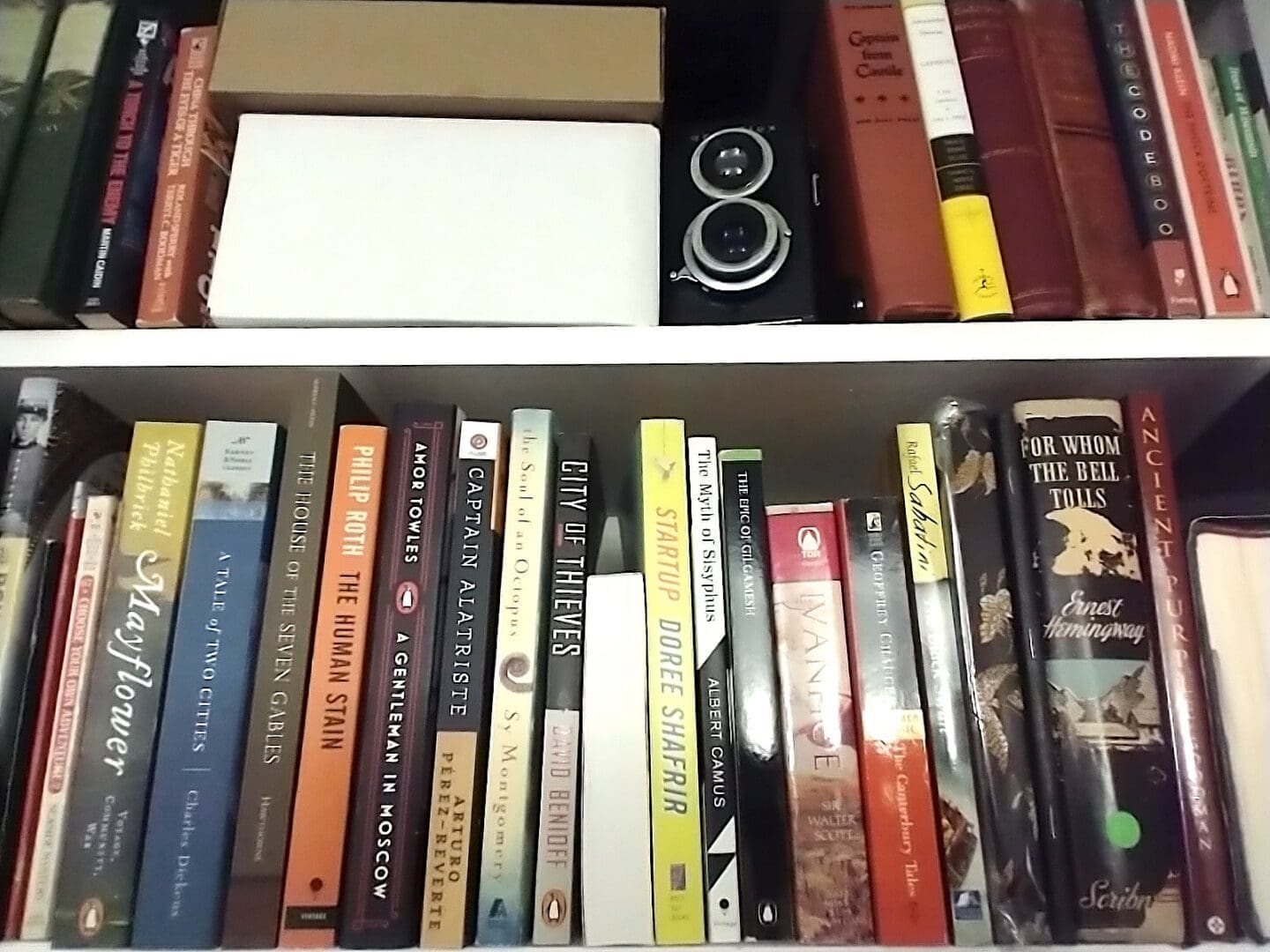
“Mayflower” by Nathaniel Philbrick (not a novel but the best history of the early American colonies that I’ve ever read…and it reads like a novel)
2010s and 2020s
“The Night Circus” by Erin Morgenstern
“Ready Player One” by Ernest Cline
“11/22/63” by Stephen King (while he’s best known for horror, I think this is the best book he has written)
“The Girl with all the Gifts” by M. R. Carey (in a decade filled with zombie novels, this is one of the better ones to represent the era)
“Project Hail Mary” by Andy Weir
Okay. So I haven’t read as many novels in the past 20 years that came out in the past 20 years. I am also still chasing the mainstream classics pre-1970s. My tastes also started moving more toward nonfiction in this time period, too. My list is not the end-all, be-all definition of what should be considered a classic. Clearly, I’m missing romance novels that will likely transcend time…sci-fi and fantasy, too. There are some novels that others might consider classics or classic-bound that I read and thought were garbage. Plus, you might think some of my picks are garbage. That’s totally okay. I just want us to start thinking of modernish books that should be reconsidered as classics or on their way to being classics.
Please tell me some of your picks to be classics in the comments below and feel free to elaborate on why you think they should be classics. I want this to be a discussion, if possible.
No comments found for Post ID: 26449